登入
|
註冊
|
會員中心
|
結帳
|
培訓課程
魔法弟子
|
自資出版
|
電子書
|
客服中心
|
智慧型立体會員
書名
出版社
作者
isbn
編號
5050魔法眾籌
|
NG書城
|
國際級品牌課程
|
優惠通知
|
霹靂英雄音樂精選
|
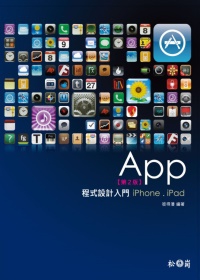
App程式設計入門:iPhone、iPad(附光碟)
此作者無相關書籍
文學小說
文學
|
小說
商管創投
財經投資
|
行銷企管
人文藝坊
宗教、哲學
社會、人文、史地
藝術、美學
|
電影戲劇
勵志養生
醫療、保健
料理、生活百科
教育、心理、勵志
進修學習
電腦與網路
|
語言工具
雜誌、期刊
|
軍政、法律
參考、考試、教科用書
科學工程
科學、自然
|
工業、工程
家庭親子
家庭、親子、人際
青少年、童書
玩樂天地
旅遊、地圖
|
休閒娛樂
漫畫、插圖
|
限制級
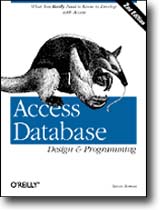
Access Database Design & Programming, 2nd Edition
作者:
Steven Roman
分類:
電腦與網路
/
程式語言
出版社:
美商歐萊禮英文書
出版日期:1999/7/1
ISBN:1565926269
書籍編號:bk0013911
頁數:0
定價:
1160
元
書價若有異動,以出版社實際定價為準
暫停販售
暫無供應商:尋找供貨商中(也有可能出版社已結束)。
團購數最低為 20 本以上
評價數:
(請將滑鼠移至星星處進行評價)
目前平均評價:
文字連結
複製語法
<a href='https://www.silkbook.com/book_detail.asp?goods_ser=bk0013911'>Access Database Design & Programming, 2nd Edition</a>
圖片連結
複製語法
<a href='https://www.silkbook.com/book_detail.asp?goods_ser=bk0013911'><img src='https://www.silkbook.com/mall_image/bk/bk0013911.jpg' ALT='Access Database Design & Programming, 2nd Edition' height='120' width='90'></a>
分
享
內容簡介
同類推薦
<u><b><FONT COLOR=#AA5555>● 內容簡介 ●</FONT></b></u> <font color=#191970> This second edition of the bestselling Access Database Design & Programming covers Access' new VBA Integrated Development Environment used by Word, Excel, and PowerPoint; the VBA language itself; Microsoft's latest data access technology, Active Data Objects (ADO); plus Open Database Connectivity (ODBC). <u><b><FONT COLOR=#AA5555>● 目錄 ●</FONT></b></u> <font color=#3366CC> Preface I. Database Design 1. Introduction Database Design Database Programming 2. The Entity-Relationship Model of a Database What Is a Database? Entities and Their Attributes Keys and Superkeys Relationships Between Entities 3. Relational Databases 19 Implementing Entities A Short Glossary Implementing the Relationships in a Relational Database The LIBRARY Relational Database Index Files NULL Values 4. Database Design Principles Redundancy Normal Forms First Normal Form Functional Dependencies Second Normal Form Third Normal Form Boyce-Codd Normal Form Normalization II. Database Queries 5. Query Languages and the Relational Algebra Query Languages Relational Algebra and Relational Calculus Details of the Relational Algebra 6. Access Structured Query Language (SQL) Introduction to Access SQL Access Query Design Access Query Types Why Use SQL? Access SQL The DDL Component of Access SQL The DML Component of Access SQL III. Database Architecture 7. Database System Architecture Why Program? Database Systems Database Management Systems The Jet DBMS Data Definition Languages Data Manipulation Languages Host Languages The Client/Server Architecture IV. Visual Basic for Applications 8. The Visual Basic Editor, Part I The Project Window The Properties Window The Code Window The Immediate Window Arranging Windows 9. The Visual Basic Editor, Part II Navigating the IDE Getting Help Creating a Procedure Run Time, Design Time, and Break Mode Errors Debugging 10. Variables, Data Types, and Constants Comments Line Continuation Constants Variables and Data Types VBA Operators 11. Functions and Subroutines Calling Functions Calling Subroutines Parameters and Arguments Exiting a Procedure Public and Private Procedures Fully Qualified Procedure Names 12. Built-in Functions and Statements The MsgBox Function The InputBox Function VBA String Functions Miscellaneous Functions and Statements Handling Errors in Code 13. Control Statements The If-Then Statement The For Loop Exit For The For Each Loop The Do Loop The Select Case Statement A Final Note on VBA V. Data Access Objects 14. Programming DAO: Overview Objects The DAO Object Model The Microsoft Access Object Model Referencing Objects Collections Are Objects Too The Properties Collection Closing DAO Objects A Look at the DAO Objects The CurrentDb Function 15. Programming DAO: Data Definition Language Creating a Database Opening a Database Creating a Table and Its Fields Creating an Index Creating a Relation Creating a QueryDef 16. Programming DAO: Data Manipulation Language Recordset Objects Opening a Recordset Moving Through a Recordset Finding Records in a Recordset Editing Data Using a Recordset VI. ActiveX Data Objects 17. ADO and OLE DB What Is ADO? Installing ADO ADO and OLE DB The ADO Object Model Finding OLE DB Providers A Closer Look at Connection Strings VII. Appendixes A. DAO 3.0/3.5 Collections, Properties, and Methods B. of the Relational Algebra 362 C. Open Database Connectivity (ODBC) D. Obtaining or Creating the Sample Database E. Suggestions for Further Reading <u><b><FONT COLOR=#AA5555>● 作者簡介 ●</FONT></b></u> <font color=#3366CC> Steven Roman Steven Roman is a Professor Emeritus of mathematics at the California State University, Fullerton. He has taught at a number of other universities, including MIT, the University of California at Santa Barbara, and the University of South Florida. Dr. Roman received his B.A. degree from the University of California at Los Angeles and his Ph.D. from the University of Washington. Dr. Roman has authored 32 books, including a number of books on mathematics, such as Coding and Information Theory, Advanced Linear Algebra, and Field Theory, published by Springer-Verlag. He has also written a series of 15 small books entitled Modules in Mathematics, designed for the general college-level liberal arts student. Beside his books for O'Reilly (Access Database Design & Programming, Learning Word Programming, Writing Excel Macros, Developing Visual Basic Add-ins, Win32 API Programming with Visual Basic (in production), Dr. Roman has written two other computer books, entitled Concepts of Object-Oriented Programming with Visual Basic and Understanding Personal Computer Hardware, an in-depth look at how PC hardware works, both published by Springer-Verlag. Dr. Roman is interested in combinatorics, algebra, and computer science.
Node.js生成式
AI Agent 實
快速精通iOS 26
帶你用 Python
Software M
精通 Python|
演算法訓練營|入門篇
APCS 完全攻略:
軟體架構原理 第二版
我阿嬤都比你會測試:
為了保障您的權益,新絲路網路書店所購買的商品均享有到貨七天的鑑賞期(含例假日)。退回之商品必須於鑑賞期內寄回(以郵戳或收執聯為憑),且商品必須是全新狀態與完整包裝(商品、附件、內外包裝、隨貨文件、贈品等),否則恕不接受退貨。