登入
|
註冊
|
會員中心
|
結帳
|
培訓課程
魔法弟子
|
自資出版
|
電子書
|
客服中心
|
智慧型立体會員
書名
出版社
作者
isbn
編號
5050魔法眾籌
|
NG書城
|
國際級品牌課程
|
優惠通知
|
霹靂英雄音樂精選
|
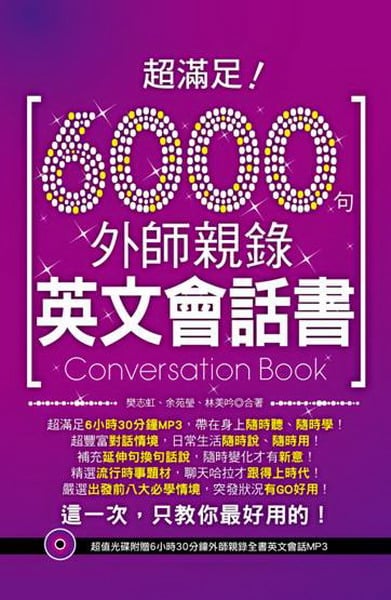
超滿足!6000句外師親錄英文會話書(超值光碟附贈6小時30分鐘外師親錄全書英文會話MP3)
.
彩圖初級英文文法Le
.
彩圖初級英文文法Le
.
彩圖初級英文文法Le
文學小說
文學
|
小說
商管創投
財經投資
|
行銷企管
人文藝坊
宗教、哲學
社會、人文、史地
藝術、美學
|
電影戲劇
勵志養生
醫療、保健
料理、生活百科
教育、心理、勵志
進修學習
電腦與網路
|
語言工具
雜誌、期刊
|
軍政、法律
參考、考試、教科用書
科學工程
科學、自然
|
工業、工程
家庭親子
家庭、親子、人際
青少年、童書
玩樂天地
旅遊、地圖
|
休閒娛樂
漫畫、插圖
|
限制級
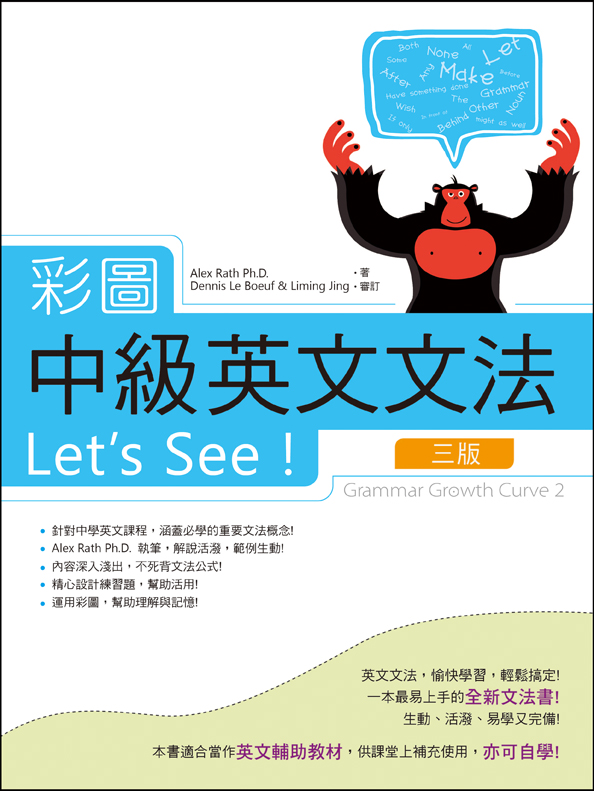
彩圖中級英文文法Let’s See!【三版】(16K軟精裝+解答別冊)
Grammar Growth Curve 2
作者:
Alex Rath Ph.D.
譯者:
羅竹君、丁宥榆
分類:
語言工具
/
英語進修
叢書系列:英語文法
出版社:
寂天文化
出版日期:2019/5/16
ISBN:9789863188018
書籍編號:kk0487345
頁數:512
定價:
530
元
優惠價:
79
折
419
元
書價若有異動,以出版社實際定價為準
絕版書
絕版書:確定不再版的商品,僅提供書籍資訊參考。
評價數:
(請將滑鼠移至星星處進行評價)
目前平均評價:
文字連結
複製語法
<a href='https://www.silkbook.com/book_detail.asp?goods_ser=kk0487345'>彩圖中級英文文法Let’s See!【三版】(16K軟精裝+解答別冊)</a>
圖片連結
複製語法
<a href='https://www.silkbook.com/book_detail.asp?goods_ser=kk0487345'><img src='https://www.silkbook.com/mall_image/bk/kk0487345.jpg' ALT='彩圖中級英文文法Let’s See!【三版】(16K軟精裝+解答別冊)' height='120' width='90'></a>
分
享
內容簡介
作者介紹
書籍目錄
同類推薦
彩圖中級英文文法Let’s See!【三版】(16K軟精裝+解答別冊) 內容簡介 英文文法,愉快學習,輕鬆搞定! 一本淺顯易上手的全新文法書! 生動、活潑、易學又完備! 本書適合當作英文輔助教材,供課堂上補充使用,亦可自學! * 針對高中英文課程,涵蓋必學的重要文法概念! * Alex Rath Ph.D. 執筆,解說活潑,範例生動! * 內容深入淺出,不死背文法公式! * 精心設計練習題,幫助活用! * 運用彩圖,幫助理解與記憶! 本書針對中級英文文法,精心編寫學習教材。書中文法說明與練習並重,且按教育部頒布的課程標準來設計單元,內容齊備,條例清楚。全書按文法類別,共分為24大章: Chapter 1現在式 Chapter 2過去式 Chapter 3完成式 Chapter 4未來式 Chapter 5動詞的一些重要用法 Chapter 6片語動詞 Chapter 7名詞 Chapter 8冠詞 Chapter 9數量 Chapter 10代名詞 Chapter 11形容詞 Chapter 12副詞 Chapter 13情態動詞 (1) Chapter 14情態動詞(2) Chapter 15被動語態 Chapter 16假設語氣和條件句 Chapter 17間接引述 Chapter 18不定詞和動名詞 Chapter 19句子的類型 Chapter 20關係子句 Chapter 21連接詞 Chapter 22表示地點和移動方向的介系詞 Chapter 23表示時間的介系詞 Chapter 24其他介系詞 本書是專為進階學習者所設計的文法書,全彩印刷,搭配上百張吸睛彩圖解說,要顛覆你對文法書的刻板印象,給你不一樣的學習新感受! 1. 從基礎文法,到進階文法,內容最齊全! 收錄中高級必學的文法條目,難度適中,絕對符合進階學習者的需要。 2. 一頁文法,一頁練習,編排最方便學習! 每一單元採對頁編排,左頁文法說明文法重點,右頁立即做練習,分量固定,學習進度好安排,能定焦學習重點,也能立即檢測學習成效。 3. 列點說明,好抓重點,學習最有效率! 各單元內的文法條目,採取條列式說明,清楚易消化。 4. 彩色圖解,幫助理解與記憶,學習無負擔! 上百張的彩色圖片,帶你進入文法的美麗新世界。大量的圖解練習,沒有文法書密密麻麻的文字背誦壓力,學習文法也可以放鬆無負擔! 5. 例句豐富,取材廣泛,內容最實用! 豐富而多元的生活化例句,取材廣泛,舉凡運動、休閒、閱讀、飲食,都在取材範圍內,句子簡潔好閱讀,讓學文法就像說會話一樣輕鬆寫意。 6. 採用表格,分析整理重點,解說最清楚! 大量採用表格式說明,或歸納重點,或進行比較,或補充資訊,一目了然,有效捕捉重點資訊。 7. 密集練習,反覆熟練文法,學了就不會忘! 本書提供大量的練習,將文法訴諸於實用,在實用中真正領略文法、運用文法於無形,而非背了就忘。習題之編寫以簡單、切中練習目標為主,不以考倒學習者為出發點,即使瘋狂練習也不厭倦。
目錄 Chapter 1 Present tenses 現在式 1 Introduction 動詞的時態介紹 2 Present simple tense 現在簡單式 3 Present continuous tense 現在進行式 4 Comparison between the present simple tense and the present continuous tense 現在簡單式與現在進行式的比較 5 Verbs not used in the continuous forms 不能用於進行式的動詞 6 Verbs used in the present simple and the present continuous with different meanings 用於現在簡單式和現在進行式意義不同的動詞 Chapter 2 Past tenses 過去式 7 Simple past tense 過去簡單式 8 Irregular verbs 不規則動詞表 9 Past continuous tense 過去進行式 10 Comparison between the simple past and the past continuous tense 過去簡單式和過去進行式的比較 11 Continuous forms with "always" for expressing complaints 進行式搭配always表示抱怨的用法 Chapter 3 Perfect tenses 完成式 12 Present perfect simple tense (1) 現在完成式(1) 13 Present perfect simple tense (2) 現在完成式(2) 14 Present perfect simple with some adverbs and prepositions 常與現在完成式連用的一些副詞和介系詞 15 Comparison between the present perfect simple and the past simple (1) 「現在完成式」與「過去簡單式」的比較(1) 16 Comparison between the present perfect simple and the past simple (2) 「現在完成式」與「過去簡單式」的比較(2) 17 Present perfect continuous 現在完成進行式 18 Comparison between the present perfect continuous and the present perfect simple tense (1) 「現在完成進行式」與「現在完成式」的比較(1) 19 Comparison between the present perfect continuous and the present perfect simple tense (2) 「現在完成進行式」與「現在完成式」的比較(2) 20 Past perfect simple tense 過去完成式 21 Past perfect continuous tense 過去完成進行式 Chapter 4 Future tenses 未來式 22 Simple future "will" 簡單未來式will 23 "Be going to" for the future be going to表示未來意義的用法 24 Comparison between the simple future "will" and "be going to" 簡單未來式will和be going to的比較 25 Present continuous for the future and the comparison with "be going to" 「現在進行式」表示未來意義的用法,以及與be going to的比較 26 Present Simple for the future 現在簡單式表示未來意義的用法 27 Future continuous 未來進行式 28 Future perfect and future perfect continuous 未來完成式與未來完成進行式 Chapter 5 Verbs: essential usage 動詞的一些重要用法 29 "Have" and "have got" have和have got的用法 30 "Have" for action have作行為動詞的用法 31 Be being be being的用法 32 Linking verbs 連綴動詞 33 Causative verbs: "make," "have," and "get" 使役動詞make、have和get的用法 34 Causative verbs: "Let" let 作為使役動詞的用法 Chapter 6 Phrasal verbs 片語動詞 35 Phrasal verbs: two words, transitive, and separable 片語動詞:兩個字、及物、可分 36 Phrasal verbs: two words, transitive, and nonseparable (1) 片語動詞:兩個字、及物、不可分(1) 37 Phrasal verbs: two words, transitive, and nonseparable (2) 片語動詞:兩個字、及物、不可分(2) 38 Phrasal verbs: two words and intransitive 片語動詞:兩個字、不及物 39 Phrasal verbs: three words 片語動詞:三個字 40 Phrasal verbs: usages with slight variations in meaning 片語動詞:不同用法在細微的意義差異 Chapter 7 Nouns 名詞 41 Singular and plural nouns: regular 單數與複數名詞:規則名詞 42 Singular and plural nouns: irregular 單數與複數名詞:不規則名詞 43 Countable and uncountable nouns 可數與不可數名詞 44 List of common uncountable nouns 常見不可數名詞表 45 Nouns always in plural forms 只以複數形態出現的名詞 46 Counting an uncountable nouns 不可數名詞的計算 47 Proper nouns and collective nouns 專有名詞與集合名詞 48 Compound nouns 複合名詞 49 Possessive ‘s: forms 所有格「’s」的構成方式 50 Possessive ‘s: use 所有格「’s」的用法 51 "The . . . of . . ." for possession the . . . of . . .表示所有權的用法 Chapter 8 Articles 冠詞 52 A, an 不定冠詞a、an 53 The 定冠詞the 54 Talking in general 「泛指」的用法 55 Expressions with "the" (1) 要加the的情況(1) 56 Expressions with "the" (2) 要加the的情況(2) 57 Expressions without "the" (1) 不加the的情況(1) 58 Expressions without "the" (2) 不加the的情況(2) 59 Place names with or without "the" 專有地名加the或不加the 60 Expressions with or without "the" with different meanings 加the或不加the意義不同的用語 Chapter 9 Quantity 數量 61 Expressions for quantity 表示數量的用語 62 Indefinite pronouns for quantity 表示數量的不定代名詞 63 Indefinite pronouns with singular or plural verbs 不定代名詞該搭配單數動詞或複數動詞 64 "Some" and "any" some和any 65 "Many" and "much" many與much 66 "Few," and "little" few與little 67 Both both 68 "Either" and "neither" either與neither 69 All all 70 "All," "every," and "whole" all、every和whole 71 "No" and "none" no與none 72 "One" and "ones" one與ones 73 Indefinite pronouns with some-, any-, every-, no- 以some、any、every或no開頭的不定代名詞 Chapter 10 Pronouns 代名詞 74 Personal pronouns: subject and object pronouns 人稱代名詞:主詞代名詞與受詞代名詞 75 Personal pronouns: common usages of subject pronouns 主詞代名詞與受格代名詞的常見用法 76 Possessive pronouns and possessive adjectives 所有格代名詞與所有格形容詞 77 Reflexive pronouns (1) 反身代名詞(1) 78 Reflexive pronouns (2) 反身代名詞(2) Chapter 11 Adjectives 形容詞 79 Form, position, and order of adjectives 形容詞的格式、位置與順序 80 Comparative and superlative adjectives: forms 形容詞比較級與最高級的形式 81 Comparative and superlative adjectives: use 形容詞比較級與最高級的用法 Chapter 12 Adverbs 副詞 82 Adverbs of manner 狀態副詞/方式副詞 83 Adverbs of time and place 時間副詞與地方副詞 84 Adverbs of frequency 頻率副詞 85 Adverbs of probability 可能性副詞 86 Adverbs of degree 程度副詞 87 Adverbs "still," "yet," and "already" 副詞still、yet、already的用法 88 Adverbs "too" and "enough" 副詞too、enough的用法 89 Adverbs "so," "such," "any more/longer," and "no longer" 副詞so、such、any more/longer、no longer 的用法 Chapter 13 Modal verbs (1) 情態動詞 (1) 90 Modal verbs: general (1) 情態動詞的一般用法(1) 91 Modal verbs: general (2) 情態動詞的一般用法(2) 92 Ability: "can" and "be able to" 表示「能力」:can與be able to 93 Ability: "could" and "be able to" 表示「能力」:could與be able to 94 Permission: "can," "could," and "may" 表示「許可」:can、could和may 95 Obligation and necessity:"must" and "have to" 表示「義務與必要」:must和have to 96 Obligation and necessity:"have to" and "have got to" 表示「義務與必要」:have to和have got to 97 Obligation and choices: "mustn’t," "don’t have to," "haven’t got to," "don’t need to," "needn’t," and "didn’t need to" 表示「義務與選擇」:mustn’t、don’t have to、haven’t got to、don’t need to、needn’t、didn’t need to 98 Obligation and advice: "should," "ought to," and "shall" 表示「義務與建議」:should、ought to、shall 99 Obligation and advice:"had better" and "be supposed to" 表示「義務與建議」:had better和be supposed to Chapter 14 Modal verbs (2) 情態動詞(2) 100 Possibility: may, might, could 表示「可能性」:may、might、could 101 Possibility: can, should, and ought to 表示「可能性」:can、should、ought to 102 Deduction: must, can’t表示「推論」:must和can’t 103 Requests: can, could, may, will, would 表示「要求」:can、could、may、will、would 104 Offers: will, shall, can, could, and would 表示「提供幫助或物品」:will、shall、can、could、would 105 Suggestions: shall, let’s, why don’t we, how about, what about, can, could 表示「建議」:shall、let’s、why don’t we、how about、what about、can、could 106 Habits: used to 表示「習慣」:used to 107 Habits: will, would 表示「習慣」:will、would 108 Other uses of "will," "won’t," and "wouldn’t" will、won’t、wouldn’t的其他用法 109 "would rather" and "may/might as well" would rather和may/might as well的用法 110 Important uses of "should" should的重要用法 Chapter 15 Passive voice 被動語態 111 The passive: forms 被動語態的構成方式 112 The passive: general use 被動語態的一般用法 113 Verbs with two objects and the use of "by" and "with" in the passive 雙受詞的動詞以及by和with在被動句裡的用法 114 Some common passive sentence structures常見的被動句型 115 Have something done have something done的用法 Chapter 16 Subjunctive mood and conditionals 假設語氣和條件句 116 "Wish" and "if only" wish和if only的用法 117 "If" sentences: real present or future conditionals if子句:現在或未來有可能發生的真實假設 118 General conditionals: repeated events or truth 表示「習慣」或「真理」的條件句 119 "If" sentences: unreal present or future conditionals if子句:與現在或未來事實相反的條件句 120 "If" sentences: unreal past conditionals if子句:與過去事實相反的條件句 121 Conditional clauses without "if" 不使用if的條件子句 122 "It’s time in subjunctive mood" and "and/or in conditionals" it’s time的假設用法和and/or表示條件的用法 Chapter 17 Reported Speech 間接引述 123 Direct and reported speech 直接引述與間接引述 124 Reported speech: verb forms (1) 間接引述的動詞時態(1) 125 Reported speech: verb forms (2) 間接引述的動詞時態(2) 126 Reported speech: changes of pronouns, adjectives, and adverbs 間接引述的代名詞、形容詞和副詞的變化 127 Reported questions 間接引述疑問句 128 Reported speeches using the "to infinitive" 使用不定詞的間接引述句 Chapter 18 Infinitives and -ing forms 不定詞和動名詞 129 Infinitives and -ing forms 不定詞與動名詞 130 Verbs with the "to infinitives" 要接不定詞的動詞 131 Verbs with object and the "to infinitives" 通常要接受詞再接不定詞的動詞 132 Verbs followed by -ing forms 必須接動名詞的動詞 133 Verbs followed by -ing forms or infinitives with the same meaning 接動名詞或不定詞意義相同的動詞 134 Verbs followed by -ing forms or infinitives with different meanings (1) 接動名詞或不定詞意義不同的動詞(1) 135 Verbs followed by -ing forms or infinitives with different meanings (2) 接動名詞或不定詞意義不同的動詞(2) 136 Infinitives used as complements and infinitives of purpose 不定詞作補語和表「目的」的用法 137 Preposition with -ing forms 介系詞要接動名詞 138 "Need" and "see" with -ing form or the "to infinitive" need和see接動名詞和不定詞的用法 139 Participle clauses/participle clauses 分詞片語/分詞子句 140 Yes/No questions Yes/No疑問句 Chapter 19 Types of sentences 句子的種類 141 Wh- questions Wh-疑問句 142 Question words: what, who, which, whose 疑問詞:what、who、which、whose 143 Question words: where, when, why, how 疑問詞:where、when、why、how 144 Negative questions 否定疑問句 145 Tags Question 附加問句 146 Tags Question : other forms 特殊的附加問句形式 147 Reply questions 回應式疑問句 148 Indirect questions 間接問句 149 Short replies with "so do I, neither do I, etc." so do I、neither do I的簡答句型 150 Restrictive and non-restrictive relative clauses 限定關係子句與非限定關係子句 Chapter 20 Relative clauses 關係子句 151 Restrictive relative clauses with "who," "which," and "that" 以who、which、that引導的限定關係子句 152 Leaving out objective relative pronouns in restrictive relative clauses 限定關係子句中受詞關係代名詞的省略 153 Restrictive relative clauses with "whose," "where," "when," and "why/that" 以whose、where、when、why/that引導的限定關係子句 154 Non-defining relative clauses 非限定關係子句 155 Relative clauses with prepositions 搭配介系詞的關係子句 Chapter 21 Linking words 連接語 156 Linking words of time: when, as, while, as soon as, after, and until 表示時間的連接語:when、as、while、as soon as、before、after、until 157 Linking words of contrast: although, even though, though, however, in spite of, despite, while, and "whereas" 表示對比的連接語:although、even though、though、however、in spite of、despite、while、whereas 158 Linking words of reason: because, because of, as, since, and "due to" 表示因果的連接語:because、because of、as、since、due to 159 Linking words of result: so, as a result, therefore, so . . . that, such . . . that 表示結果的連接語:so、as a result、therefore、so/such . . . that 160 Linking words of purpose: to, in order to, so as to, for, and so that 表示目的的連接語:to、in order to、so as to、for、so that 161 Linking words of purpose: in case 表示目的的連接語:in Chapter 22 Prepositions of place and movement 表示地點和移動方向的介系詞 162 Prepositions of place: basic meanings of in, at, on 表示地點的介系詞:in、at、on的基本意義 163 Prepositions of place: in, at, on with different locations 表示地點的介系詞:in、at、on說明各種地點的用法 164 Prepositions of place: over, under, above, below, underneath 表示地點的介系詞:over、under、above、below、underneath 165 Prepositions of place: in front of, behind, opposite, between,among 表示地點的介系詞:in front of、behind、opposite、between、among 166 Prepositions of place: near, next to, by, beside, against, inside, outside 表示地點的介系詞:near、next to、by、beside、against、inside、outside 167 Prepositions of movement: in, into, out of, on, onto, off 表示移動方向的介系詞:in、into、out of、on、onto、off 168 Prepositions of movement: up, down, from, to, toward 表示移動方向的介系詞:up、down、from、to、toward 169 Prepositions of movement: along, across, over, through, past, around 表示移動方向的介系詞:along、across、over、through、past、around 170 Transport: get in, get out of, get on, get off, by, on, in 表示「交通方式」的介系詞:get in、get out of、get on、get off、by、on、in Chapter 23 Prepositions of time 表示時間的介系詞 171 Prepositions of time: in, at, on (1) 表示時間的介系詞:in、at、on(1) 172 Prepositions of time: in, at, on (2) Prepositions of time: in, at, on (2) 173 Prepositions of time: for, since, before (compared with the adverb "ago") 表示時間的介系詞:for、since、before(與副詞ago比較) 174 Prepositions of time: during (compared with "in," "for," and "while") 表示時間的介系詞:during與in、for、while 的比較 175 Prepositions of time: by, until, from . . . to, from . . . until, before, after 表示時間的介系詞:by、until、from . . . to、from . . . until、before、after Chapter 24 Other prepositions 其他介系詞 176 Individual usage of prepositions: with, by, in, on 一些介系詞的個別用法:with、by、in、on 177 Individual usage of prepositions: like, as(compared with "as it") 一些介系詞的個別用法:like、as(與連接詞as if比較) 178 Indirect objects with or without "to" and "for" to和for搭配間接受詞的用法 179 Adjectives with specific prepositions (1) 形容詞所搭配的特定介系詞(1) 180 Adjectives with specific prepositions (2) 形容詞所搭配的特定介系詞(2) 181 Nouns with specific prepositions (1) 名詞所搭配的特定介系詞(1) 182 Nouns with specific prepositions (2) 名詞所搭配的特定介系詞(2) 183 Verbs with specific prepositions 動詞所搭配的特定介系詞 184 Prepositional phrases 慣用的介系詞片語 185 Review of prepositions 介系詞總複習
英文字彙王:核心單字
1本就通 高中英文作
品味莎士比亞英文名作
威尼斯商人 The
英文閱讀必考題型 一
近五年英文學測/ 指
新聞英文聽說讀:加深
救命!我在學英文文法
商務會話這樣學才記得
FUN學美國教科書S
為了保障您的權益,新絲路網路書店所購買的商品均享有到貨七天的鑑賞期(含例假日)。退回之商品必須於鑑賞期內寄回(以郵戳或收執聯為憑),且商品必須是全新狀態與完整包裝(商品、附件、內外包裝、隨貨文件、贈品等),否則恕不接受退貨。