登入
|
註冊
|
會員中心
|
結帳
|
培訓課程
魔法弟子
|
自資出版
|
電子書
|
客服中心
|
智慧型立体會員
書名
出版社
作者
isbn
編號
5050魔法眾籌
|
NG書城
|
國際級品牌課程
|
優惠通知
|
霹靂英雄音樂精選
|
TCP/IP網路通訊協定(第二版)
此作者無相關書籍
文學小說
文學
|
小說
商管創投
財經投資
|
行銷企管
人文藝坊
宗教、哲學
社會、人文、史地
藝術、美學
|
電影戲劇
勵志養生
醫療、保健
料理、生活百科
教育、心理、勵志
進修學習
電腦與網路
|
語言工具
雜誌、期刊
|
軍政、法律
參考、考試、教科用書
科學工程
科學、自然
|
工業、工程
家庭親子
家庭、親子、人際
青少年、童書
玩樂天地
旅遊、地圖
|
休閒娛樂
漫畫、插圖
|
限制級
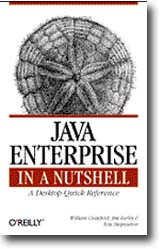
Java Enterprise in a Nutshell
作者:
David Flanagan.Jim Farley.William Crawford .Kris Magnusson
分類:
電腦與網路
/
網路
出版社:
美商歐萊禮英文書
出版日期:1999/9/1
ISBN:1565924835
書籍編號:bk0013918
頁數:622
定價:
1050
元
書價若有異動,以出版社實際定價為準
暫停販售
暫無供應商:尋找供貨商中(也有可能出版社已結束)。
團購數最低為 20 本以上
評價數:
(請將滑鼠移至星星處進行評價)
目前平均評價:
文字連結
複製語法
<a href='https://www.silkbook.com/book_detail.asp?goods_ser=bk0013918'>Java Enterprise in a Nutshell</a>
圖片連結
複製語法
<a href='https://www.silkbook.com/book_detail.asp?goods_ser=bk0013918'><img src='https://www.silkbook.com/mall_image/bk/bk0013918.jpg' ALT='Java Enterprise in a Nutshell' height='120' width='90'></a>
分
享
內容簡介
同類推薦
<u><b><FONT COLOR=#AA5555>● 內容簡介 ●</FONT></b></u> <font color=#191970> The Java Enterprise APIs are essential building blocks for creating enterprise-wide distributed applications in Java. Java Enterprise in a Nutshell covers the RMI, Java IDL, JDBC, JNDI, Java Servlet, and Enterprise JavaBeans APIs, providing a fast-paced tutorial and compact reference material on each of the technologies. Covers Java 1.2. <u><b><FONT COLOR=#AA5555>● 目錄 ●</FONT></b></u> <font color=#3366CC> Preface PART 1: Introducing the Java Enterprise APIs Chapter 1. Introduction Enterprise Computing Defined Enterprise Computing Demystified The Java Enterprise APIs Enterprise Computing Scenarios Java Enterprise APIs Versus Jini Chapter 2. JDBC JDBC Architecture JDBC Basics JDBC Drivers Connecting to the Database Statements Results Handling Errors Prepared Statements Metadata Transactions Stored Procedures Escape Sequences JDBC 2.0 Chapter 3. Remote Method Invocation Introduction to RMI Defining Remote Objects Creating the Stubs and Skeletons Accessing Remote Objects as a Client Dynamically Loaded Classes Remote Object Activation RMI and Native Method Calls RMI over IIOP Chapter 4. Java IDL The CORBA Architecture Creating CORBA Objects Putting It in the Public Eye Finding Remote Objects What If I Don't Know the Interface? Chapter 5. Java Servlets The Servlet Life Cycle Servlet Basics Servlet Chaining Custom Servlet Initialization Thread Safety Server-Side Includes Cookies Session Tracking Databases and Non-HTML Content The Servlet API 2.1 Chapter 6. JNDI JNDI Architecture A JNDI Example Introducing the Context Looking Up Objects in a Context The NamingShell Application Listing the Children of a Context Creating and Destroying Contexts Binding Objects Accessing Directory Services Modifying Directory Entries Creating Directory Entries Searching a Directory Chapter 7. Enterprise JavaBeans A Note on Evolving Standards EJB Roles Transaction Management Implementing a Basic EJB Object Implementing Session Beans Implementing Entity Beans Deploying an Enterprise JavaBeans Object Using an Enterprise JavaBeans Object Changes in EJB 1.1 Specification PART 2: Enterprise Reference Chapter 8. SQL Reference Relational Databases Data Types Schema Manipulation Commands Data Manipulation Commands Functions Return Codes Chapter 9. RMI Tools rmic rmiregistry rmid serialver Chapter 10. IDL Reference IDL Keywords Identifiers Comments Basic Data Types Constants and Literals Naming Scopes User-Defined Data Types Exceptions Module Declarations Interface Declarations Chapter 11. CORBA Services Reference Naming Service Security Service Event Service Persistent Object Service Life Cycle Service Concurrency Control Service Externalization Service Relationship Service Transaction Service Query Service Licensing Service Property Service Time Service Trading Service Collection Service Chapter 12. Java IDL Tools idltojava tnameserv PART 3: API Quick Reference .TC 0 "How to Use This Quick Reference" 295 Chapter 13. The java.rmi Package Chapter 14. The java.rmi.activation Package Chapter 15. The java.rmi.dgc Package Chapter 16. The java.rmi.registry Package Chapter 17. The java.rmi.server Package Chapter 18. The java.sql Package Chapter 19. The javax.ejb Package Chapter 20. The javax.ejb.deployment Package Chapter 21. The javax.jms Package Chapter 22. The javax.naming Package Chapter 23. The javax.naming.directory Package Chapter 24. The javax.naming.spi Package Chapter 25. The javax.servlet Package Chapter 26. The javax.servlet.http Package Chapter 27. The javax.sql Package Chapter 28. The javax.transaction Package Chapter 29. The javax.transaction.xa Package Chapter 30. The org.omg.CORBA Package .TC CT1 31 "The org.omg.CORBA.DynAnyPackage" .TC CT2 "Package" 506 .TC CT1 32 "The org.omg.CORBA.ORBPackage" .TC CT2 "Package" 508 Chapter 33. The org.omg.CORBA.portable Package .TC CT1 34 "The org.omg.CORBA.TypeCodePackage" .TC CT2 "Package" 517 Chapter 35. The org.omg.CosNaming Package .TC CT1 36 "The org.omg.CosNaming.-" .TC CT2 "NamingContextPackage Package" 531 Chapter 37. Class, Method, and Field Index Index <u><b><FONT COLOR=#AA5555>● 作者簡介 ●</FONT></b></u> <font color=#3366CC> David Flanagan David Flanagan is the author of the bestselling Java in a Nutshell. When David isn't busy writing about Java, he is a consulting computer programmer, user interface designer, and trainer. His other books with O'Reilly include JavaScript: The Definitive Guide, Netscape IFC in a Nutshell, X Toolkit Intrinsics Reference Manual, and Motif Tools: Streamlined GUI Design and Programming with the Xmt Library. David has a degree in computer science and engineering from the Massachusetts Institute of Technology. Jim Farley Jim Farley is a software engineer, computer scientist, and IT manager. His recent activities have included heading up the engineering group at the Harvard Business School and bringing good things to life at GE's Research and Development center. He's dealt with computing (distributed and otherwise) in lots of different ways, from automated image inspection to temporal reasoning systems. Jim has bachelor's and master's degrees in computer systems engineering from Rensselaer Polytechnic Institute. William Crawford William Crawford got involved with Web development back in 1995. He has worked at the Children's Hospital Informatics Program in Boston, where he helped develop the first Web-based electronic medical record system and was involved in some of the first uses of Java at the enterprise level. He has consulted for a wide variety of institutional clients, including Boston Children's Hospital, Harvard Medical Center, and several Fortune 500 companies. Will currently heads the product development team at Invantage, Inc., a Cambridge, Massachusetts, company developing Java-based intranet tools for the pharmaceutical industry. In his spare time he is an avid photographer, writer, and economics student at Yale University. Kristopher Magnusson Kristopher Magnusson is the Open Source Programs Architect at Novell. He edited the original Java Directory Service Interface proposal for JavaSoft in 1996, worked on the Novell JNDI design team as the lead writer, and wrote JNDI sample code and tutorials. He earned a Bachelor's of Science from the University of Utah in 1991 in economics, has been active in the NeXT and open source communities for years, and loves object-oriented design and computing. He lives with his partner, Kristen, in Salt Lake City, where he enjoys community activism, mountain biking, and oenophilia.
電腦網路原理|第七版
多媒體設計的 13
混合雲安全架構|零信
電子商務與ChatG
WordPress
建構多租戶SaaS架
Docker建置與執
網站擷取|使用Pyt
想要 SSR?快使用
解密搜尋引擎:分詞技
為了保障您的權益,新絲路網路書店所購買的商品均享有到貨七天的鑑賞期(含例假日)。退回之商品必須於鑑賞期內寄回(以郵戳或收執聯為憑),且商品必須是全新狀態與完整包裝(商品、附件、內外包裝、隨貨文件、贈品等),否則恕不接受退貨。