登入
|
註冊
|
會員中心
|
結帳
|
培訓課程
魔法弟子
|
自資出版
|
電子書
|
客服中心
|
智慧型立体會員
書名
出版社
作者
isbn
編號
5050魔法眾籌
|
NG書城
|
國際級品牌課程
|
優惠通知
|
霹靂英雄音樂精選
|
微處理機/單晶片組合語言教學範本(附CD)
.
INTERNETWO
.
COMPUTER N
.
NETWORK SY
文學小說
文學
|
小說
商管創投
財經投資
|
行銷企管
人文藝坊
宗教、哲學
社會、人文、史地
藝術、美學
|
電影戲劇
勵志養生
醫療、保健
料理、生活百科
教育、心理、勵志
進修學習
電腦與網路
|
語言工具
雜誌、期刊
|
軍政、法律
參考、考試、教科用書
科學工程
科學、自然
|
工業、工程
家庭親子
家庭、親子、人際
青少年、童書
玩樂天地
旅遊、地圖
|
休閒娛樂
漫畫、插圖
|
限制級
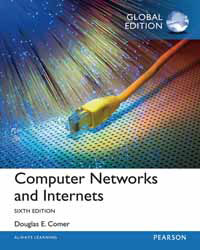
COMPUTER NETWORKS AND INTERNETS 6/E (GE)
作者:
COMER
分類:
參考•考試•教科書
/
大專學院教科書
出版社:
全華圖書
出版日期:2015/9/15
ISBN:9781292061177
書籍編號:kk0534924
頁數:672
定價:
1360
元
書價若有異動,以出版社實際定價為準
訂購後立即為您進貨
訂購後立即為您進貨:目前無庫存量,讀者下訂後,開始進入調書程序,一般天數約為2-10工作日(不含例假日)。
團購數最低為 20 本以上
評價數:
(請將滑鼠移至星星處進行評價)
目前平均評價:
文字連結
複製語法
<a href='https://www.silkbook.com/book_detail.asp?goods_ser=kk0534924'>COMPUTER NETWORKS AND INTERNETS 6/E (GE)</a>
圖片連結
複製語法
<a href='https://www.silkbook.com/book_detail.asp?goods_ser=kk0534924'><img src='https://www.silkbook.com/mall_image/bk/kk0534924.jpg' ALT='COMPUTER NETWORKS AND INTERNETS 6/E (GE)' height='120' width='90'></a>
分
享
內容簡介
書籍目錄
同類推薦
COMPUTER NETWORKS AND INTERNETS 6/E (GE) 內容簡介 Leading networking authority Douglas Comer presents a wide-ranging, self-contained tour of the concepts, principles, and technologies that enable today’s Internet to support applications ranging from web browsing to telephony and multimedia. Comer begins by illuminating the applications and facilities offered by today’s Internet. Next, he systematically introduces the underlying network technologies and protocols that make them possible. With these concepts and technologies established, he introduces several of the most important contemporary issues faced by network implementers and managers, including quality of service, Internet telephony, multimedia, network security, and network management. Comer has carefully designed this book to support both top-down and bottom-up teaching approaches. Students need no background in operating systems, and no sophisticated math: Comer relies throughout on figures, drawings, examples, and analogies, not mathematical proofs. Appropriate for all introductory-to-intermediate courses in computer networking, the Internet, or Internet applications; students need no background in networking, operating systems, or advanced mathematics. 本書特色 1.Broad Coverage of Key Concepts and Principles, Presented in a Technology-independent Fashion - Drawing on more than 30 years’ experience at the leading edge of networking research and implementation, Comer focuses on imparting knowledge that students will need regardless of which technologies emerge or become obsolete. - Every chapter includes hands-on exercises and projects that offer opportunities for students to test their knowledge and gain confidence in their abilities. 2.Flexible Organization that Supports both Top-down and Bottom-up Teaching Approaches - The text is organized into five parts. Chapters may be sequenced in multiple orders to accommodate a wide variety of instructor/student/course needs and preferences. - This text combines the best of top-down and bottom-up approaches. When presented in order, the book exposes students to applications and allows them to write network programs early, while delivering all material in logical order so a reader understands how each new technology builds on lower layer technologies. 3.An Accessible Presentation that Resonates with Students - No sophisticated mathematics is required—instead of formal mathematical proofs, Comer presents highly accessible examples, figures, drawings, and analogies. - The text answers the basic question: how do computer networks and Internets operate? It provides a comprehensive, self-contained tour through all of networking that describes applications, Internet protocols, network technologies, such as LANs and WANs, and low-level details, such as data transmission and wiring. It shows how protocols use the underlying hardware and how applications use the protocol stack to provide functionality for users. 4.Keep Your Course Current - In response to suggestions from readers and recent changes in networking, the new edition has been completely revised and updated. The significant changes include: 5.NEW! Updates throughout each chapter 6.NEW! Additional figures to enhance explanations 7.NEW! Integration of IPv4 and IPv6 in all chapters 8.NEW! Improved coverage of MPLS and tunneling 9.NEW! New chapter on Software Defined Networking and OpenFlow 10.NEW! New chapter on the Internet of Things and Zigbee
目錄 Preface xxiii PART I Introduction And Internet Applications Chapter1 Introduction And Overview 1 Chapter2 Internet Trends 17 Chapter3 Internet Applications And Network Programming 27 Chapter4 Traditional Internet Applications 49 PART II Data Communication Basics Chapter5 Overview Of Data Communications 85 Chapter6 Information Sources And Signals 93 Chapter7 Transmission Media 113 Chapter8 Reliability And Channel Coding 135 Chapter9 Transmission Modes 153 Chapter10 Modulation And Modems 165 Chapter11 Multiplexing And Demultiplexing (Channelization) 181 Chapter12 Access And Interconnection Technologies 199 PART III Packet Switching And Network Technologies Chapter13 Local Area Networks: Packets, Frames, And Topologies 219 Chapter14 The IEEE MAC Sublayer 239 Chapter15 Wired LAN Technology (Ethernet And 802.3) 253 Chapter16 Wireless Networking Technologies 265 Chapter17 Repeaters, Bridges, And Switches 291 Chapter18 WAN Technologies And Dynamic Routing 305 Chapter19 Networking Technologies Past And Present 325 PART IV Internetworking Chapter20 Internetworking: Concepts, Architecture, And Protocols 335 Chapter21 IP: Internet Addressing 345 Chapter22 Datagram Forwarding 369 Chapter23 Support Protocols And Technologies 391 Chapter24 UDP: Datagram Transport Service 415 Chapter25 TCP: Reliable Transport Service 425 Chapter26 Internet Routing And Routing Protocols 447 PART V Other Networking Concepts & Technologies Chapter27 Network Performance (QoS And DiffServ) 469 Chapter28 Multimedia And IP Telephony (VoIP) 489 Chapter29 Network Security 507 Chapter30 Network Management (SNMP) 533 Chapter31 Software Defined Networking (SDN) 545 Chapter32 The Internet Of Things 567 Chapter33 Trends In Networking Technologies And Uses 579 Appendix 1 A Simplified Application Programming Interface 589 Index 617
勞工行政與勞工立法(
圖解傷口護理
物理實驗(第十四版)
個體經濟學──理論與
芳香療法(第五版)
咖啡概論(第二版)
民法概要(第五版)
人員安全與社會責任
HACCP理論與實務
電工法規(第五版)
為了保障您的權益,新絲路網路書店所購買的商品均享有到貨七天的鑑賞期(含例假日)。退回之商品必須於鑑賞期內寄回(以郵戳或收執聯為憑),且商品必須是全新狀態與完整包裝(商品、附件、內外包裝、隨貨文件、贈品等),否則恕不接受退貨。