登入
|
註冊
|
會員中心
|
結帳
|
培訓課程
魔法弟子
|
自資出版
|
電子書
|
客服中心
|
智慧型立体會員
書名
出版社
作者
isbn
編號
5050魔法眾籌
|
NG書城
|
國際級品牌課程
|
優惠通知
|
霹靂英雄音樂精選
|
微處理機/單晶片組合語言教學範本(附CD)
.
ARTIFICIAL
文學小說
文學
|
小說
商管創投
財經投資
|
行銷企管
人文藝坊
宗教、哲學
社會、人文、史地
藝術、美學
|
電影戲劇
勵志養生
醫療、保健
料理、生活百科
教育、心理、勵志
進修學習
電腦與網路
|
語言工具
雜誌、期刊
|
軍政、法律
參考、考試、教科用書
科學工程
科學、自然
|
工業、工程
家庭親子
家庭、親子、人際
青少年、童書
玩樂天地
旅遊、地圖
|
休閒娛樂
漫畫、插圖
|
限制級
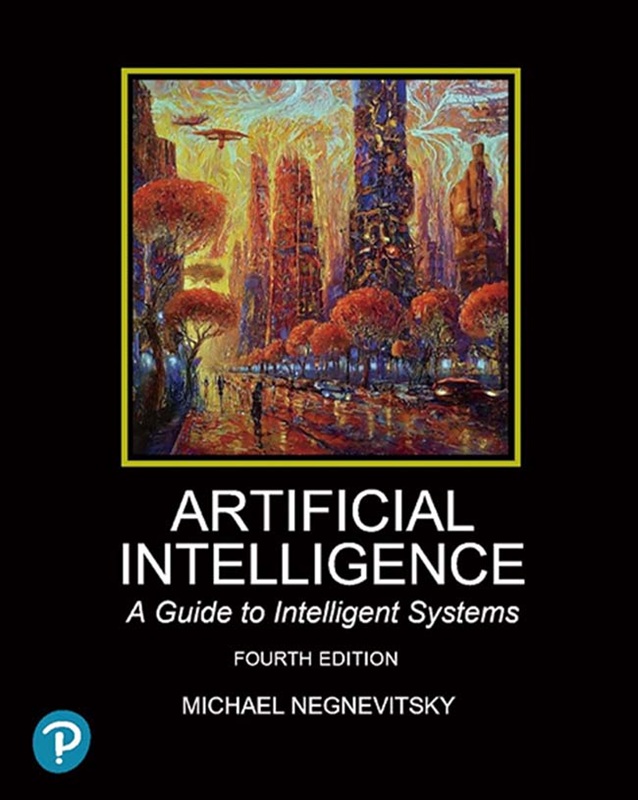
ARTIFICIAL INTELLIGENCE:A GUIDE TO INTELLIGENT SYSTEMS 4/E人工智慧:智慧型系統導論(第四版)
作者:
NEGNEVITSKY
分類:
參考•考試•教科書
/
大專學院教科書
叢書系列:大學資訊?
出版社:
PE
出版日期:2025/1/20
ISBN:9781292730851
書籍編號:kk0603240
頁數:600
定價:
1680
元
書價若有異動,以出版社實際定價為準
訂購後立即為您進貨
訂購後立即為您進貨:目前無庫存量,讀者下訂後,開始進入調書程序,一般天數約為2-10工作日(不含例假日)。
團購數最低為 20 本以上
評價數:
(請將滑鼠移至星星處進行評價)
目前平均評價:
文字連結
複製語法
<a href='https://www.silkbook.com/book_detail.asp?goods_ser=kk0603240'>ARTIFICIAL INTELLIGENCE:A GUIDE TO INTELLIGENT SYSTEMS 4/E人工智慧:智慧型系統導論(第四版) </a>
圖片連結
複製語法
<a href='https://www.silkbook.com/book_detail.asp?goods_ser=kk0603240'><img src='https://www.silkbook.com/mall_image/bk/kk0603240.jpg' ALT='ARTIFICIAL INTELLIGENCE:A GUIDE TO INTELLIGENT SYSTEMS 4/E人工智慧:智慧型系統導論(第四版) ' height='120' width='90'></a>
分
享
內容簡介
作者介紹
書籍目錄
同類推薦
ARTIFICIAL INTELLIGENCE:A GUIDE TO INTELLIGENT SYSTEMS 4/E 人工智慧:智慧型系統導論(第四版) "What are the principles behind intelligent systems? How are they built? What are intelligent systems useful for? How do we choose the right tool for the job? These questions are answered by Michael Negnevitsky’s Artificial Intelligence: A Guide to Intelligent Systems. Unlike many books on computer intelligence, which use complex computer science terminology and are crowded with complex matrix algebra and differential equations, this text demonstrates that the ideas behind intelligent systems are simple and straightforward. This text assumes little or no programming experience as it tackles topics like expert systems, fuzzy systems, artificial neural networks, evolutionary computation, knowledge engineering, and data mining. TABLE OF CONTENTS 1. Introduction to Intelligent Systems 1.1 Intelligent Machines, or What Machines Can Do 1.2 The History of Artificial Intelligence, or From the ‘Dark Ages’ to Knowledge-based Systems 1.3 Generative AI 1.4 Summary Questions for Review References 2. Expert Systems 2.1 Introduction, or Knowledge Representation Using Rules 2.2 The Main Players in the Expert System Development Team 2.3 Structure of a Rule-based Expert System 2.4 Fundamental characteristics of an expert system 2.5 Forward Chaining and Backward Chaining Inference Techniques 2.6 MEDIA ADVISOR: A Demonstration Rule-based Expert System 2.7 Conflict Resolution 2.8 Uncertainty Management in Rule-based Expert Systems 2.9 Advantages and Disadvantages of Rule-based Expert systems 2.10 Summary Questions for Review References 3. Fuzzy Systems 3.1 Introduction, or What Is Fuzzy Thinking? 3.2 Fuzzy Sets 3.3 Linguistic Variables and Hedges 3.4 Operations of Fuzzy Sets 3.6 Fuzzy Inference 3.7 Building a Fuzzy Expert System 3.8 Summary Questions for Review References 4. Frame-based Systems and Semantic Networks 4.1 Introduction, or What Is a Frame? 4.2 Frames as a Knowledge Representation Technique 4.3 Inheritance in Frame-based Systems 4.4 Methods and Demons 4.5 Interaction of Frames and Rules 4.6 Buy Smart: A Frame-based Expert System 4.7 The Web of Data 4.8 RDF – Resource Description Framework and RDF Triples 4.9 Turtle, RDF Schema and OWL 4.10 Querying the Semantic Web with SPARQL 4.11 Summary Questions for Review References 5. Artificial Neural Networks 5.1 Introduction, or How the Brain Works 5.2 The Neuron as a Simple Computing Element 5.3 The Perceptron 5.4 Multilayer Neural Networks 5.5 Accelerated Learning in Multilayer Neural Networks 5.6 The Hopfield Network 5.7 Bidirectional Associative Memory 5.8 Self-organising Neural Networks 5.9 Reinforcement Learning 5.10 Summary Questions for Review References 6. Deep Learning and Convolutional Neural Networks 6.1 Introduction, or How “Deep” Is a Deep Neural Network? 6.2 Image Recognition or How Machines See the World 6.3 Convolution in Machine Learning 6.4 Activation Functions in Deep Neural Networks 6.5 Convolutional Neural Networks 6.6 Back-propagation Learning in Convolutional Networks 6.7 Batch Normalisation 6.8 Summary Questions for Review References 7. Evolutionary Computation 7.1 Introduction, or Can Evolution Be Intelligent? 7.2 Simulation of Natural Evolution 7.3 Genetic Algorithms 7.4 Why Genetic Algorithms Work 7.5 Maintenance Scheduling with Genetic Algorithms 7.6 Genetic Programming 7.7 Evolution Strategies 7.8 Ant Colony Optimisation 7.9 Particle Swarm Optimisation 7.10 Summary Questions for Review References 8. Hybrid Intelligent Systems 8.1 Introduction, or How to Combine German Mechanics with Italian Love 8.2 Neural Expert Systems 8.3 Neuro-Fuzzy Systems 8.4 ANFIS: Adaptive Neuro-Fuzzy Inference System 8.5 Evolutionary Neural Networks 8.6 Fuzzy Evolutionary Systems 8.7 Summary Questions for Review References 9. Knowledge Engineering 9.1 Introduction, or What Is Knowledge Engineering? 9.2 Will an Expert System Work for My Problem? 9.3 Will a Fuzzy Expert System Work for My Problem? 9.4 Will a Neural Network Work for My Problem? 9.5 Will a Deep Neural Network Work for My Problem? 9.6 Will Genetic Algorithms Work for My Problem? 9.7 Will Particle Swarm Optimisation Work for My Problem? 9.8 Will a Hybrid Intelligent System Work for My Problem? 9.9 Summary Questions for Review References 10. Data Mining and Knowledge Discovery 10.1 Introduction, or What Is Data Mining? 10.2 Statistical Methods and Data Visualisation 10.3 Principal Components Analysis 10.4 Relational Databases and Database Queries 10.5 The Data Warehouse and Multidimensional Data Analysis 10.6 Decision Trees 10.7 Association Rules and Market Basket Analysis 10.8 Summary Questions for Review References Glossary Index " 本書特色 "1. 淺顯易懂:本書刻意避開艱深的電腦科學專業術語,不會充斥複 雜的矩陣代數和微分方程。作者強調書中的概念其實相當簡單直觀, 適合一般讀者閱讀。 2. 無程式門檻:讀者不需要具備程式設計能力或深厚的微積分基礎就 能理解內容。這本書是根據作者30年來授課經驗,針對非資訊背景的 學生編寫而成。 3. 實用導向:書中涵蓋專家系統、模糊系統、類神經網路、深度學習 等主題,並說明如何選擇合適的工具來解決實際問題。特別適合想要 運用AI解決實務問題的讀者。 4. 跨領域應用:本書的目標讀者包含工程師、科學家、企業經理人、 醫生、律師等各行各業的專業人士,特別適合那些想用非傳統方法解 決問題的人。 5. 與時俱進:書中介紹最新的AI工具和技術,包括MATLAB工具箱 (模糊邏輯、類神經網路、全域最佳化、深度學習)以及ChatGPT等。 雖然書中會展示這些工具的使用,但內容並不綁定於特定工具,讀者 可以靈活運用不同的工具來實作。 "
"1. Introduction to Intelligent Systems 1.1 Intelligent Machines, or What Machines Can Do 1.2 The History of Artificial Intelligence, or From the ‘Dark Ages’ to Knowledge-based Systems 1.3 Generative AI 1.4 Summary Questions for Review References 2. Expert Systems 2.1 Introduction, or Knowledge Representation Using Rules 2.2 The Main Players in the Expert System Development Team 2.3 Structure of a Rule-based Expert System 2.4 Fundamental characteristics of an expert system 2.5 Forward Chaining and Backward Chaining Inference Techniques 2.6 MEDIA ADVISOR: A Demonstration Rule-based Expert System 2.7 Conflict Resolution 2.8 Uncertainty Management in Rule-based Expert Systems 2.9 Advantages and Disadvantages of Rule-based Expert systems 2.10 Summary Questions for Review References 3. Fuzzy Systems 3.1 Introduction, or What Is Fuzzy Thinking? 3.2 Fuzzy Sets 3.3 Linguistic Variables and Hedges 3.4 Operations of Fuzzy Sets 3.6 Fuzzy Inference 3.7 Building a Fuzzy Expert System 3.8 Summary Questions for Review References 4. Frame-based Systems and Semantic Networks 4.1 Introduction, or What Is a Frame? 4.2 Frames as a Knowledge Representation Technique 4.3 Inheritance in Frame-based Systems 4.4 Methods and Demons 4.5 Interaction of Frames and Rules 4.6 Buy Smart: A Frame-based Expert System 4.7 The Web of Data 4.8 RDF – Resource Description Framework and RDF Triples 4.9 Turtle, RDF Schema and OWL 4.10 Querying the Semantic Web with SPARQL 4.11 Summary Questions for Review References 5. Artificial Neural Networks 5.1 Introduction, or How the Brain Works 5.2 The Neuron as a Simple Computing Element 5.3 The Perceptron 5.4 Multilayer Neural Networks 5.5 Accelerated Learning in Multilayer Neural Networks 5.6 The Hopfield Network 5.7 Bidirectional Associative Memory 5.8 Self-organising Neural Networks 5.9 Reinforcement Learning 5.10 Summary Questions for Review References 6. Deep Learning and Convolutional Neural Networks 6.1 Introduction, or How “Deep” Is a Deep Neural Network? 6.2 Image Recognition or How Machines See the World 6.3 Convolution in Machine Learning 6.4 Activation Functions in Deep Neural Networks 6.5 Convolutional Neural Networks 6.6 Back-propagation Learning in Convolutional Networks 6.7 Batch Normalisation 6.8 Summary Questions for Review References 7. Evolutionary Computation 7.1 Introduction, or Can Evolution Be Intelligent? 7.2 Simulation of Natural Evolution 7.3 Genetic Algorithms 7.4 Why Genetic Algorithms Work 7.5 Maintenance Scheduling with Genetic Algorithms 7.6 Genetic Programming 7.7 Evolution Strategies 7.8 Ant Colony Optimisation 7.9 Particle Swarm Optimisation 7.10 Summary Questions for Review References 8. Hybrid Intelligent Systems 8.1 Introduction, or How to Combine German Mechanics with Italian Love 8.2 Neural Expert Systems 8.3 Neuro-Fuzzy Systems 8.4 ANFIS: Adaptive Neuro-Fuzzy Inference System 8.5 Evolutionary Neural Networks 8.6 Fuzzy Evolutionary Systems 8.7 Summary Questions for Review References 9. Knowledge Engineering 9.1 Introduction, or What Is Knowledge Engineering? 9.2 Will an Expert System Work for My Problem? 9.3 Will a Fuzzy Expert System Work for My Problem? 9.4 Will a Neural Network Work for My Problem? 9.5 Will a Deep Neural Network Work for My Problem? 9.6 Will Genetic Algorithms Work for My Problem? 9.7 Will Particle Swarm Optimisation Work for My Problem? 9.8 Will a Hybrid Intelligent System Work for My Problem? 9.9 Summary Questions for Review References 10. Data Mining and Knowledge Discovery 10.1 Introduction, or What Is Data Mining? 10.2 Statistical Methods and Data Visualisation 10.3 Principal Components Analysis 10.4 Relational Databases and Database Queries 10.5 The Data Warehouse and Multidimensional Data Analysis 10.6 Decision Trees 10.7 Association Rules and Market Basket Analysis 10.8 Summary Questions for Review References Glossary Index "
勞工行政與勞工立法(
圖解傷口護理
物理實驗(第十四版)
個體經濟學──理論與
芳香療法(第五版)
咖啡概論(第二版)
民法概要(第五版)
人員安全與社會責任
HACCP理論與實務
電工法規(第五版)
為了保障您的權益,新絲路網路書店所購買的商品均享有到貨七天的鑑賞期(含例假日)。退回之商品必須於鑑賞期內寄回(以郵戳或收執聯為憑),且商品必須是全新狀態與完整包裝(商品、附件、內外包裝、隨貨文件、贈品等),否則恕不接受退貨。