登入
|
註冊
|
會員中心
|
結帳
|
培訓課程
魔法弟子
|
自資出版
|
電子書
|
客服中心
|
智慧型立体會員
書名
出版社
作者
isbn
編號
5050魔法眾籌
|
NG書城
|
國際級品牌課程
|
優惠通知
|
霹靂英雄音樂精選
|
TCP/IP網路通訊協定(第二版)
.
Learning P
文學小說
文學
|
小說
商管創投
財經投資
|
行銷企管
人文藝坊
宗教、哲學
社會、人文、史地
藝術、美學
|
電影戲劇
勵志養生
醫療、保健
料理、生活百科
教育、心理、勵志
進修學習
電腦與網路
|
語言工具
雜誌、期刊
|
軍政、法律
參考、考試、教科用書
科學工程
科學、自然
|
工業、工程
家庭親子
家庭、親子、人際
青少年、童書
玩樂天地
旅遊、地圖
|
休閒娛樂
漫畫、插圖
|
限制級
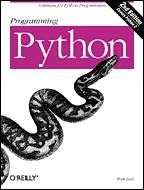
Programming Python, 2nd Edition (Includes CD-ROM)
作者:
Mark Lutz
分類:
電腦與網路
/
網路
出版社:
美商歐萊禮英文書
出版日期:2001/3/1
ISBN:0596000855
書籍編號:bu0027861
頁數:1256
定價:
1930
元
書價若有異動,以出版社實際定價為準
暫停販售
暫無供應商:尋找供貨商中(也有可能出版社已結束)。
團購數最低為 20 本以上
評價數:
(請將滑鼠移至星星處進行評價)
目前平均評價:
文字連結
複製語法
<a href='https://www.silkbook.com/book_detail.asp?goods_ser=bu0027861'>Programming Python, 2nd Edition (Includes CD-ROM)</a>
圖片連結
複製語法
<a href='https://www.silkbook.com/book_detail.asp?goods_ser=bu0027861'><img src='https://www.silkbook.com/mall_image/bk/bu0027861.jpg' ALT='Programming Python, 2nd Edition (Includes CD-ROM)' height='120' width='90'></a>
分
享
內容簡介
同類推薦
<u><b><font color="#aa0000">內容簡介</font></b></u> <font color=#3366cc> Programming Python, 2nd Edition, focuses on advanced uses of the Python programming/scripting language, which has evolved from an emerging language of interest primarily to pioneers, to a widely accepted tool that traditional programmers use for real day-to-day development tasks. With Python, you can do almost anything you can do with C++; but Python is an interpreted language designed for rapid application development and deployment. Among other things, Python supports object-oriented programming; a remarkably simple, readable, and maintainable syntax; integration with C components; and a vast collection of pre-coded interfaces and utilities. As Python has grown to embrace developers on a number of different platforms (Unix, Linux, Windows, Mac), companies have taken notice and are adopting Python for their products. It has shown up animating the latest Star Wars movie, serving up maps and directories on the Internet, guiding users through Linux installations, testing chips and boards, managing Internet discussion forums, scripting online games, and even scripting wireless products. Programming Python, 2nd Edition, is the most comprehensive resource for advanced Python programmers available today. Reviewed and endorsed by Python creator Guido van Rossum, who also provides the foreword, this book zeroes in on real-world Python applications. It's been updated for Python 2.0 and covers Internet scripting, systems programming, Tkinter GUIs, C integration domains, and new Python tools and applications. Among them: IDLE, JYthon, Active Scripting and COM extensions, Zope, PSP server pages, restricted execution mode, the HTMLgen and SWIG code generators, thread support, CGI and Internet protocol modules. Such applications are the heart and soul of this second edition. Veteran O'Reilly author Mark Lutz has included a platform-neutral CD-ROM with book examples and various Python-related packages, including the full Python 2.0 source code distribution. <u><b><font color="#aa0000">目錄</font></b></u> <font color=#3366cc> <b>Foreword</b> <b>Preface for the Second Edition</b> <b>1. Introducing Python</b> The Life of Python The Compulsory Features List What's Python Good For? What's Python Not Good For? <u><b>I. System Interfaces</u></b> <b>2. System Tools</b> Why Python Here? System Scripting Overview The sys Module The os Module Script Execution Context Current Working Directory Command-Line Arguments Shell Environment Variables Standard Streams File Tools Directory Tools <b>3. Parallel System Tools</b> Forking Processes Threads Program Exits Interprocess Communication Pipes Signals Launching Programs on Windows Other System Tools <b>4. Larger System ExamplesI</b> Splitting and Joining Files Generating Forward-Link Web Pages A Regression Test Script Packing and Unpacking Files User-Friendly Program Launchers <b>5. Larger System Examples II</b> Fixing DOS Line Ends Fixing DOS Filenames Searching Directory Trees Visitor: Walking Trees Generically Copying Directory Trees Deleting Directory Trees Comparing Directory Trees <u><b>II. GUI Programming</u></b> <b>6. Graphical User Interfaces</b> Python GUI Development Options Tkinter Overview Climbing the GUI Learning Curve The End of the Tutorial Python/Tkinter for Tcl/Tk Converts <b>7. A Tkinter Tour, Part 1</b> Configuring Widget Appearance Toplevel Windows Dialogs Binding Events Message and Entry Checkbutton, Radiobutton, and Scale Running GUI Code Three Ways Images <b>8. A Tkinter Tour, Part 2</b> Menus Listboxes and Scrollbars Text Canvas Grids Time Tools, Threads, and Animation The End of the Tour The PyDemos and PyGadgets Launchers <b>9. Larger GUI Examples</b> Advanced GUI Coding Techniques Complete Program Examples PyEdit: A Text Editor Program/Object PyView: An Image and Notes Slideshow PyDraw: Painting and Moving Graphics PyClock: An Analog/Digital Clock Widget PyToe: A Tic-Tac-Toe Game Widget Where to Go from Here <u><b>III. Internet Scripting</u></b> <b>10. Network Scripting</b> Plumbing the Internet Socket Programming Handling Multiple Clients A Simple Python File Server <b>11. Client-Side Scripting</b> Transferring Files over the Net Processing Internet Email The PyMailGui Email Client Other Client-Side Tools <b>12. Server-Side Scripting</b> What's a Server-Side CGI Script? Climbing the CGI Learning Curve The Hello World Selector Coding for Maintainability More on HTML and URL Escapes Sending Files to Clients and Servers <b>13. Larger Web Site Examples I</b> The PyMailCgi Web Site The Root Page Sending Mail by SMTP Reading POP Email Utility Modules CGI Script Trade-offs <b>14. Larger Web Site Examples II</b> The PyErrata Web Site The Root Page Browsing PyErrata Reports Submitting PyErrata Reports PyErrata Database Interfaces Administrative Tools Designing for Reuse and Growth <b>15. Advanced Internet Topics</b> Zope: A Web Publishing Framework HTMLgen: Web Pages from Objects JPython ( Jython): Python for Java Grail: A Python-Based Web Browser Python Restricted Execution Mode XML Processing Tools Windows Web Scripting Extensions Python Server Pages Rolling Your Own Servers in Python <u><b>IV. Assorted Topics</u></b> <b>16. Databases and Persistence</b> Persistence Options in Python DBM Files Pickled Objects Shelve Files SQL Database Interfaces PyForm: A Persistent Object Viewer <b>17. Data Structures</b> Implementing Stacks Implementing Sets Binary Search Trees Graph Searching Reversing Sequences Permuting Sequences Sorting Sequences Data Structures Versus Python Built-ins PyTree: A Generic Tree Object Viewer <b>18. Text and Language</b> Strategies for Parsing Text in Python String Module Utilities Regular Expression Matching Parser Generators Hand-Coded Parsers PyCalc: A Calculator Program/Object <u><b>V. Integration</u></b> <b>19. Extending Python</b> C Extensions Overview A Simple C Extension Module The SWIG Integration Code Generator Wrapping C Environment Calls A C Extension Module String Stack A C Extension Type String Stack Wrapping C++ Classes with SWIG <b>20. Embedding Python</b> C Embedding API Overview Basic Embedding Techniques Registering Callback Handler Objects Using Python Classes in C ppembed: A High-Level Embedding API Other Integration Topics <u><b>VI. The End</u></b> <b>21. Conclusion: Python and the Development Cycle</b> "Something's Wrong with the Way We Program Computers" The "Gilligan Factor" Doing the Right Thing Enter Python But What About That Bottleneck? On Sinking the Titanic So What's Python: The Sequel In the Final Analysis... Postscript to the Second Edition <b>A. Recent Python Changes</b> <b>B. Pragmatics</b> <b>C. Python Versus C++</b> <b>Index</b> <u><b><font color="#aa0000">作者簡介</font></b></u> <font color=#3366cc> <font color=purple>Mark Lutz </font> Mark Lutz is a Python trainer, writer, and software developer, and one of the primary figures in the Python community. He is the author of Programming Python and Python Pocket Reference, and coauthor of Learning Python. Mark has been involved with Python since 1992 and began teaching Python classes in 1997. In addition, he holds B.S. and M.S. degrees in computer science from the University of Wisconsin, and has worked on compilers, programming tools, scripting applications, and assorted client/server systems. Mark can be reached by email at lutz@rmi.net, or on the web at http://rmi.net/~lutz.
電腦網路原理|第七版
多媒體設計的 13
混合雲安全架構|零信
電子商務與ChatG
WordPress
建構多租戶SaaS架
Docker建置與執
網站擷取|使用Pyt
想要 SSR?快使用
解密搜尋引擎:分詞技
為了保障您的權益,新絲路網路書店所購買的商品均享有到貨七天的鑑賞期(含例假日)。退回之商品必須於鑑賞期內寄回(以郵戳或收執聯為憑),且商品必須是全新狀態與完整包裝(商品、附件、內外包裝、隨貨文件、贈品等),否則恕不接受退貨。