登入
|
註冊
|
會員中心
|
結帳
|
培訓課程
魔法弟子
|
自資出版
|
電子書
|
客服中心
|
智慧型立体會員
書名
出版社
作者
isbn
編號
5050魔法眾籌
|
NG書城
|
國際級品牌課程
|
優惠通知
|
霹靂英雄音樂精選
|
在文字的密林中漫步
此作者無相關書籍
文學小說
文學
|
小說
商管創投
財經投資
|
行銷企管
人文藝坊
宗教、哲學
社會、人文、史地
藝術、美學
|
電影戲劇
勵志養生
醫療、保健
料理、生活百科
教育、心理、勵志
進修學習
電腦與網路
|
語言工具
雜誌、期刊
|
軍政、法律
參考、考試、教科用書
科學工程
科學、自然
|
工業、工程
家庭親子
家庭、親子、人際
青少年、童書
玩樂天地
旅遊、地圖
|
休閒娛樂
漫畫、插圖
|
限制級
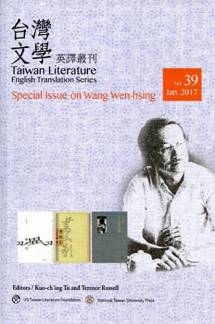
台灣文學英譯叢刊(No.39):王文興專輯
分類:
文學
/
語言
叢書系列:台灣文學英譯叢刊
出版社:
臺大出版中心
出版日期:2017/1/9
ISBN:9789863502098
書籍編號:kk0449432
頁數:264
定價:
450
元
優惠價:
95
折
427
元
書價若有異動,以出版社實際定價為準
訂購後立即為您進貨
訂購後立即為您進貨:目前無庫存量,讀者下訂後,開始進入調書程序,一般天數約為2-10工作日(不含例假日)。
團購數最低為 20 本以上
評價數:
(請將滑鼠移至星星處進行評價)
目前平均評價:
文字連結
複製語法
<a href='https://www.silkbook.com/book_detail.asp?goods_ser=kk0449432'>台灣文學英譯叢刊(No.39):王文興專輯</a>
圖片連結
複製語法
<a href='https://www.silkbook.com/book_detail.asp?goods_ser=kk0449432'><img src='https://www.silkbook.com/mall_image/bk/kk0449432.jpg' ALT='台灣文學英譯叢刊(No.39):王文興專輯' height='120' width='90'></a>
分
享
內容簡介
作者介紹
同類推薦
台灣文學英譯叢刊(No.39):王文興專輯 書籍簡介: 本輯選譯臺灣文學現代派作家王文興的兩篇小說、六篇散文,以及七篇論文。除了兩篇新近「出土」和發表的小說外,特別介紹作家過去鮮為人注意,有關作家成長過程、思想理念、宗教信仰的散文,和其多種文藝評論,呈現他對中國古典文學、電影、書法、英文小說的研究和寫作觀點,有助於英文讀者對王文興全面的認識。 Wang Wen-hsing is an internationally renowned modernist writer who has long been regarded by Taiwan writers as a bellwether of literary aesthetics. His reputation rests on his devotion to an innovative literary language and writing style, demonstrated primarily in his novels. His persistent pursuit of an ideal style has challenged standard aesthetic views of Chinese literary language and conventional reading strategies. He views writing much as he does painting, music, or any other art form: while acknowledging the importance of content, he foregrounds the form. His fictional works, therefore, are not only pieces of creative writing but also creative artworks; each word and sign should be appreciated like a musical note in a song or a brush stroke in a painting. This ideal pushes him constantly to search out a more precise method to describe a specific subject, and each new method he develops is added to the reservoir of Chinese rhetoric. Due to his peculiar approach, he writes extremely slowly. During the past three decades, he has been able to write only thirty-some characters a day. To date, he has published twenty-three short stories, one novella, three novels (the second novel is in two volumes), one one-act play, three volumes of essays, and numerous poems, prose works, translations, and pieces of criticism. 王文興是台灣文學現代派的代表作家。王文興以獨特的語言風格,聞名於文學界,他對文學藝術的忠誠,數十年不改其志,廣受國內外學界和文壇的崇敬。由於其千錘百鍊的創作手法,王文興的寫作速度極其緩慢,近三十多年來維持一天三十個字的紀錄。直至目前他的著作包含了二十三個短篇小說,一個中篇,三部長篇(第二部有上下兩冊),一篇獨幕劇,三本散文集,和諸多未集結成冊的散文、詩歌、翻譯以及評論文章。王絕非多產作家,但作品篇篇如同精雕細琢的藝術品,耐人品味。其高度實驗性的寫作手法,挑戰讀者的閱讀,但又回報以無以倫比的美感享受。在華文文學的世界,獨樹一格,散發出璀璨的光芒。
Kuo-ch ing Tu(杜國清)、Terence Russell(羅德仁) 編 【編者簡介】 Kuo-ch’ing Tu(杜國清), born in Taichung, Taiwan. His research interests include Chinese literature, Chinese poetics and literary theories, comparative literature East and West, and world literatures of Chinese (Shi-Hua wenxue). He is the author of numerous books of poetry in Chinese, as well as translator of English, Japanese, and French works into Chinese. Terence Russell(羅德仁)is an Associate Professor in the Asian Studies Center at the University of Manitoba in Winnipeg, Manitoba. His early research dealt with classical Chinese literature and religion but for the past few years his interest has turned to contemporary literature in Chinese, especially the literature of Taiwan’s indigenous people. Dr. Russell has a strong interest in translation and translation theory. Shu-ning Sciban is a professor of Chinese and teaches Chinese language and literature at the University of Calgary. Her research interests include modern and contemporary Chinese and Taiwanese fiction, writing by Chinese women, Chinese diaspora literature, narratology, rhetoric, stylistics, and Chinese language. She co-edited with Fred Edwards Dragonflies: Fiction by Chinese Women in the Twentieth Century (Cornell East Asia Program, 2003) and Endless War: Fiction and Essays by Wang Wen-hsing (Cornell East Asia Program, 2011), with Lai-hsin Kang and San-hui Hong on Mandu Wang Wen-hsing [Slow reading Wang Wen-hsing] (7 volumes) (National Taiwan UP, 2013), and co-edited with Ihor Pidhainy Reading Wang Wenxing: Critical Essays (Cornell East Asia Program, 2015). 【譯者簡介】 Chu-yun Chen comes from a family with roots in Guangdong, China. Due to her father’s career in the diplomatic service, she spent part of her childhood and adolescence in Sydney, Seoul, Bangkok, and Nicosia. She received an M.A. in English and American literature from National Taiwan University. She taught in the Department of Foreign Languages and Literatures at National Taiwan University from 1970 until her retirement in 2005. She has contributed numerous Chinese-English translations, including several short stories by her husband Wang Wen-hsing. Michael Cody has a B.A. in Film Studies from York University and an M.A. in Chinese Studies from the University of Toronto. He contributed to Dragonflies, Shu-ning Sciban and Fred Edwards’p revious anthology of short stores, and continues to pursue his interest in Asian languages and cultures. Fred Edwards is an editor and translator who has a degree in Chinese Studies from the University of Toronto. Until his recent retirement, he edited the opinion page of the Toronto Star, where he wrote frequently about China-related issues, and he also served as an editorial advisor with Beijing Review. Johanna Chien-mei Liu is a professor of Chinese art andaesthetics at the department of East Asian Studies, University of Toronto, Canada. Her main research interests are philosophical aesthetics in China and the West, Chinese art theories and literary criticism, and modern Taiwanese literature. Ihor Pidhainy is an Assistant Professor at the University of West Georgia in the Department of History, as well as being the editor of the journal Ming History. He received his Ph.D. from the University of Toronto with a dissertation on the Ming Dynasty scholar, poet, and exile, Yang Shen (1488-1559), on whom he has published several articles. Steven Riep is an associate professor of Chinese and comparative literature at Brigham Young University, where he teaches courses in modern and contemporary Chinese literature, film, and culture. He has served as head of the Chinese program and as co-director of BYU’s International Cinema Program. Terence Russell is an Associate Professor in the Asian Studies Center at the University of Manitoba in Winnipeg, Manitoba. His early research dealt with classical Chinese literature and religion, but for the past few years his interest has turned to contemporary literature in Chinese, especially the literature of Taiwan’s indigenous people. Dr. Russell has a strong interest in translation and translation theory and has been a regular contributor to the Taiwan Literature: English Translation Series, and was the guest editor of Issue 24 on Taiwan indigenous myths and oral literature. Darryl Sterk is a Chinese-English literary translator, most notably of Wu Ming-Yi’s The Man With the Compound Eyes (Harvill Secker 2013), assistant professor of translation at National Taiwan University (NTU), in the Graduate Program in Translation and Interpretation (GPTI), and a scholar of translation, currently working on the translation of the script for the film Seediq Bale (Warriors of the Rainbow) into Seediq. Jane Parish Yang received her Ph.D. in Chinese from the University of Wisconsin, Madison, and was an associate professor of Chinese in the Department of Chinese and Japanese at Lawrence University, retiring in 2015. She taught beginning and advanced Chinese language, traditional and modern Chinese literature, Chinese cinema, and the East Asian studies senior seminar.
竊:以文學回應全球化
流浪者之歌【悉達多】
狗贅婿
小泉八雲.志怪文學經
花開小路二丁目的照相
獻燈使
馬里•艾密達的七天七
我們的時代(修訂版,
大亨小傳(低噪慢讀版
綠野仙蹤(低噪慢讀版
為了保障您的權益,新絲路網路書店所購買的商品均享有到貨七天的鑑賞期(含例假日)。退回之商品必須於鑑賞期內寄回(以郵戳或收執聯為憑),且商品必須是全新狀態與完整包裝(商品、附件、內外包裝、隨貨文件、贈品等),否則恕不接受退貨。